

ReadWriteWeb

Is Web Technology Making Your Life Better?

Written by Josh Catone / February 28, 2008 10:15 AM / 10 Comments

Technology, broadly, is a tool or set of tools aimed at making some aspect of life better, easier, or more efficient. On the web, that could mean scripting languages that make it easier for developers to create applications, or it could mean applications that make it easier for us to accomplish a task. Let's not debate the definition of the word technology, but rather, is web technology working for you? Are so-called web 2.0 applications making your life easier or overloading you with too much information?

"It is no secret that we live in an information overload age," is how Alex Iskold began his must-read Attention Economy overview that was published on ReadWriteWeb about one year ago. We're constantly bombarded with information these days -- news, blogs, photos, videos, Twitter, emails, text messages, phone calls, etc. All of these things are vying for and tugging at our attention.

So the question becomes: is the technology that is supposed to make our lives easier, actually overwhelming us and making our lives more difficult? And if so, how do we escape the negative effect of technology overload?

The latest in the compelling series of Oxford 2.0 debates over at the Economist web site (which we covered in December) deals with the proposition: If the promise of technology is to simplify our lives, it is failing.

Arguing on the pro side (that technology is complicating our lives) is Richard Szafranski, Partner, Toffler Associates. On the con side (that technology is simplifying our lives) is John Maeda, President Elect of the Rhode Island School of Design. The debate runs until March 6 and spectators are right now split 64%-34% in favor of the con side.

The Economist debate is speaking broadly to technology as a whole (which might include everything from the hammer and nail to the Large Hadron Collider), but the relevance to our problem of information overload is undeniable.

From Szafranski's opening statement:

"We--hundreds of millions of us and growing--embrace the very technologies that make our lives and our relationships more difficult and fill many of our waking moments with activity. We love--to the point of gluttony--to communicate, play, invent, learn, imagine and acquire. Information technology has given us tools to do all of those anywhere and round the clock. We are awash in the benefits that high-bandwidth fixed and mobile wireless communications, email, text messages, pictures, games, data and information give us, including instant access to thousands of products. The seductive ease with which we can engage in any and all of those activities, or quests or endeavours makes it difficult and stressful to not be overwhelmed by choices. Choosing takes time and our time is not unlimited. Devices and applications that save us labour in one area may merely allow us, and sometimes seem to compel us, to invest labour in other areas.

We say or hear, "I must do my email tonight, or by tomorrow I’ll have over 600 to read." We want to buy a pot. Search on "pottery" and get 254,000,000 results. We want to find the John Li we met at a conference. Search on "John Li" and get 8,600,000 results. Do I do email, narrow the searches, eat dinner, pick up my laundry or call a friend? Because technology has spawned numerous complex variations I must repeatedly go through the act of evaluating and choosing -- a labour of deciding. Technology has imposed the encumbrance of over-choice on us."

And from Maeda's first parry:

"Recognize simplicity as being about two goals realized simultaneously: the saving of time to realize efficiencies, and later wasting the time that you have gained on some humanly pursuit. Thus true simplicity in life is one part technology, and the other part away from technology.

We voluntarily let technology enter our lives in the infantile state that it currently exists, and the challenge is to wait for it to mature to something we can all be proud of. Patience is a virtue I am told, and I await the many improvements that lie ahead. To say that technology is failing to simplify our lives misses the point that in the past decade we have lived in an era of breakneck innovation. This pace is fortunately slowing and industries are retrenching so that design-led approaches can take command to give root to more meaningful technology experiences."

Szafranski is arguing that the benefit of technology has been overwhelmed by the sheer complexity and enormity of it. Technology may have solved some problems, but it has created others that are just as negative, or perhaps worse. Or, for example, Google gives us access to so much information that finding what we're looking for is such a complex task that our lives are worse off for it. On the other hand, Maeda's argument is that information technology is so new that we're only now beginning to refine it in ways that make it more simple. It can be a tad overwhelming when a Google search return 4 million results, but give it a few years and it is bound to get better.

This is an intensely interesting debate, and we thought it would be fun to try to continue it here with a focus on web technologies. Is the information overload that we're all acutely experiencing worth the utility we're getting out of it? Has technology on the web failed us or has it made our lives easier? What do you think? The floor is open for debate, let us know your thoughts in the comments.

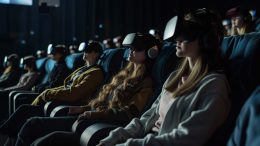
Image via a Geico ad.

Comments

Subscribe to comments for this post OR Subscribe to comments for all Read/WriteWeb posts

  • Technology I dig:

    Lightweight tents and camping equipment.

    That fandangled "automobile" thingy I own.

    Telephones, especially teeny-tiny little one's that fit in my pocket zoolander style.

    My ipod.

    Posted by: McScreedle | February 28, 2008 11:00 AM


  • For all the many hours a day I use my computer/iphone/tv/videocamera/etc, I like to remember (and if I don't, my wife will be sure to remind me) to TURN THE DAMN THING OFF.

    Meatspace is better.

    Posted by: Mark Schoneveld | February 28, 2008 11:02 AM


  • I do not mean to spam your blog but I can only point to an entry on my blog that begins to answer the question:

    http://www.fabianschonholz.com/2008/02/10/the-end-of-progress/

    But it is in how you use technology and not in technology itself that benefits can be found.

    Posted by: Fabian Schonholz | February 28, 2008 11:11 AM


  • Josh - I am not sure I understand what economics has to do with the convenience of technology. I mean seriously what would I do without my $5 latte, laptop open, on the cell phone, while I drive down the highway. If I only had 4 hands instead of 2 imagine how much more multitasking I can do.

    Posted by: ourmonmouth | February 28, 2008 1:31 PM


  • The Internet would be much more useful if there was an Identity Layer. A well formed identity layer would include services that both provision your identity and become an "on line valet"- vastly simplifying your on line experience.

    I have just launched a road map for such a free service at http://thetrustednet.org

    No new technology is needed- just a rearrangement of existing technologies to focus on users and their experience.

    Posted by: Trey | February 28, 2008 2:10 PM


  • The Power to change: the innovator’s solution

    The problem is not technology “per se” but trying, today, to manage and idealize our world and ourselves like it was 1990.

    Our inability to cope with the wave of changes that are affecting our societies and ourselves, eventually leads to stress, anxiety and to such feelings such as “Technology/Science is failing us”. I’m not saying that we should abandon a critical view of technology or science, but this feeling is, historically, cyclical and typical in the process of co-evolution that develops between the technosphere and the sociosphere.

    The fuss exists because the edge is, slowly but firmly, becoming the mainstream and we can be sure that “there will be blood”. So instead of focusing on the “technology – good or bad/ useful or not”, we should turn our efforts to design social and personal solutions that ease that transition and start making it work for ourselves and society (it’s a question of human rights – No one should be left/kept behind).

    What solutions can we devise, you might ask?

    There’s no holy grail!!! But there are steps that we should follow:
    1. Look at the edge and try to capture, take a glimpse of what are the core concepts and trends that will likely shape mankind in the next years.
    2. You shouldn’t be conservative, hence embrace open innovation i.e. don’t be afraid of using concepts and approaches from areas of knowledge into others that are completely different.

    An example could be drawn from the attention concept. If we extend it to encompass not only internet surfing but all our daily activities (sleeping, watching tv, working), I think we gain a new perspective that allows to manage it in new ways, be productive, and value what matters. This is not new because there is even signs that this is already happening – see the success of Tim Ferriss’s 4 Hour work week.

    Posted by: Ricardo Proença | February 28, 2008 4:13 PM


  • Technology allows us to access an unbelievable amount of information, and to work with it in new and really exciting ways. This means a lot of new possibilities for each of us (the great part), but on the other hand, we also feel that we will NEVER be able to do everything we might be interested in (the annoying part). So I guess we'll have to learn to be happy without having the feeling to miss something "important" all the time. But that's not necessarily a question of technology. It's a question of culture!

    Posted by: Martin | February 29, 2008 1:58 AM


  • A man universally renowned for his wisdom once said, "There is nothing new under the sun. All is vanity and chasing after wind."

    Human nature has not changed since the beginnings of recorded history. Look at the Greek or Norse gods, Native American tales, Gilgamesh, the Baghvadgita, the Bible, Confucius, the Arthur cycle, the Edda, Chaucer, Shakespeare, etc., etc. You will see the very same human wants, needs, faults, and foibles as we see today.

    Want to see a struggle to improve one's lot in life? See the ancient African tales of Anansi the Spider, or the Native American tales of Coyote. Noble sacrifice for a great cause? Look to the Spartans of Thermopylae, Roland at Roncesvaux, or today's Medal of Honor recipients. Soap-opera infidelity? Peek at Guinevere and Lancelot, or King David and Bathsheba.

    Human needs have not changed. What *has* changed is the way we go about meeting those needs. For entertainment we download MP3s - remix our own - instead of waiting for a traveling minstrel to come through town. For news we have an RSS feed piped to our Blackberry. To communicate long-distance we use Twitter or Skype rather than couriers carrying sealed scrolls.

    The ends are the same, but the means have changed. On those means, though, are industries and empires built and lost. There's not much of a market for sealing wax these days. But build a killer Facebook app, and you might make a buck.

    Plus ca change, plus c'est la meme chose. The more that things change, the more they stay the same.

    Posted by: Corrie Bergeron | February 29, 2008 9:02 AM


  • I've commented on the information overload debate hosted by The Economist - see http://www.managingio.com/2008/03/03/comment-on-information-overload-debate-hosted-by-the-economist/

    Comments are welcome!

    Posted by: Nicolas | March 9, 2008 7:20 AM


  • information will set you free. but you need a tool to control it. or else you will be overwhelmed.

    a computer can remember better than you can. but most of these newfangled web 2.0 apps are not about memory - they are about presence, they are about the now.

    really learning something demands that you stash the info somewhere you'll see it again.

    that is the thinking we are pursuing with metanotes. what delicious was for links, we hope to be for information in general - like a big groovy file cabinet for all your information.

    Posted by: Srini Kumar | March 25, 2008 12:17 AM


RECENT JOBS


RWW READERS


TEXT LINK ADS


RWW PARTNERS

adaptiveblue

Yahoo Buzz