



ReadWriteWeb

Manifesto to Avoid a Google Media Monoculture

Written by Bernard Lunn / March 26, 2008 6:15 PM / 16 Comments

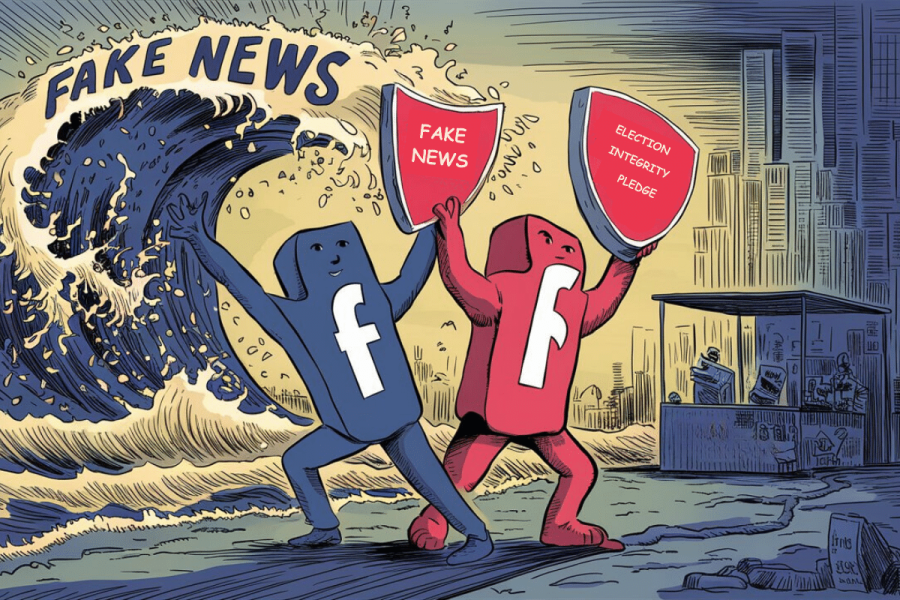
For many decades we had a PC monoculture controlled by Microsoft and, to a lesser degree, by Intel. Today, in the world of online media, that same thing looks like it could happen. But it doesn't have to be that way. This 4-point manifesto lays out how to avoid a Google media monoculture.

The Windows/Intel monoculture was good at first. The Wintel standards enabled the market to grow. The rules were clear and everybody knew who made them. However, after many brave-but-failed attempts, nobody was willing to fund the rebels and the Empire ruled unchallenged, and that inhibited innovation.

In that software story, Google stars as Luke Skywalker.

In a parallel universe called media, Google looks much more like Darth Vadar. Publishers have to publicly talk about Google as a partner while seeing their competitive advantage drained. Advertising agencies see their role as the intermediary fundamentally threatened. Even some advertisers start to fret about the lack of choice and accountability.

Media and software are now one industry. So it is really not a parallel universe.

Google is a great company and the standards that they set will continue to grow the online advertising market. It is just that everybody else in the market will get slim pickings. Serfdom sucks.

Rallying around this 4-point manifesto will prevent an online media monoculture:

  1. Use OpenX rather than Google Ad Manager. Yes, Ad Manager is currently more mature, but OpenX is backed by top tier VC and could become the Red Hat of online advertising. They will survive and thrive but need a bit of faith. Linux was immature for a long time as well. What is not to like about Ad Manager? It looks like just another great free tool from Google. It is the integration with Adsense that is a worry. One of the success stories on the Google Ad Manager site illustrates this: "The AdSense integration feature has been helpful with helping us optimize our remnant inventory. There have been numerous days where we made more money because Ad Manager was able to auto adjust and send AdSense more inventory." Take the link to Publisher tools and you get to an Adsense page with all the tools available for Publishers. Yes, all these free tools are designed to sell more AdSense. Letting Ad Manager and other Google tools automatically make these decisions on behalf of AdSense while you fly blind is not smart, particularly when you consider the next point.
  2. Publishers should ask Google to reveal their AdSense revenue split. It is kinda funny that nobody knows what share of the AdSense revenue they're getting. I have seen blog comments where people confidently state that Google only takes X%, but the fact is, Google doesn't reveal it and the percentage can vary from zero to one hundred. Yes, if your site makes less than $100 per month you get zero; the transaction costs are a reasonable excuse and who knows if they make any money hoovering up this spare change. At the other extreme, if you have real clout and there is a strategic advantage at stake for Google, a publisher can get 100%. So the averages that analysts parse from public data are meaningless to publishers. It is the most basic of business questions - "what's the deal, what do you get, what do I get?"
  3. Advertisers should push Google towards CPA (Cost Per Action) to get real accountability on clicks. One hears advertisers say, "who cares how they get their clicks, it is all performance based, I only pay when I get a click so I don't care." That is a naive view. The conversion is what matters. If clicks don't convert you lose twice - you pay Google and you pay the cost to attempt conversion - bad leads are worse than no leads. AdSense is not a branding tool, it is part of the direct marketing industry. Ask Google for a revenue share deal. If they don't give it to you, find somebody who will. Get clarity on revenue share percentage. If you are selling a $100 product, you need to know your cost of sale.
  4. Back independent audience measurement rather than relying on Google Analytics industry benchmarking. The recent announcement about the availability of analytics benchmarking data was overshadowed by closure of the DoubleClick deal and the Ad Manager release, but is possibly even more significant. The announcement just looks like two simple new settings that allow Publishers to share their data. This FAQ explains it well. Google understands that controlling the data means control of the transaction. This is like financial markets such as FX where a company such as Reuters could dominate an industry by controlling the information flow. The biggest speed-bump on the road to more online advertising is reliable, verifiable, audited audience measurement data. Big advertisers won't open up their wallets to the long tail until they see this transparency. This should come via industry standard bodies such as IAB and MRC and not the largest ad network.

I am not anti-Google. Google Web Toolkit is a wonderful addition to the open source community and I love what they are doing with Apps to give Microsoft a run for the money with Office. In fact, after this post, I was accused of being a Google fanboy! Nor does this touch upon Google's dominance of search - that is the free market at work and if anybody can create a fundamentally better search engine, they can win.

Nor is this asking anybody to do what is not in their best interests. For publishers there is a small trade off involved in the OpenX vs Ad Manager decision, but the long term benefits should outweigh any short term hassle.

The fundamental issue is that AdSense is the weak link in the Google chain. It has fundamental issues for both publishers and advertisers and Google should not be able to use their dominance in other areas to shore up this weakness.

Comments

Subscribe to comments for this post OR Subscribe to comments for all Read/WriteWeb posts

  • That is childish... Come on!! I will use your own example: Microsoft. Did anyone had to interfere or the market worked it own ways to bring Microsoft good competitors? What about Intel? I don't recall a manifesto to avoid Intel and even though we have ADM. That is how the market works and there is no need to be afraid of it. Customers are no slaves of any company. If they use Google is because as far as now it is the best choice. Once, OpenX workout its own issues and start being a dam good service no one will even think twice before switching from Google to OpenX. We don't need a silly manifesto against anything...

    Deep down I think you know that. You just want to create some buzz around the subject, right?

    Posted by: Thiago Guerra | March 26, 2008 9:44 PM


  • That's a great start - but we also need an alternative decent search engine for the masses!

    Posted by: Richard | March 26, 2008 9:57 PM


  • I fully agree with your points and strongly believe there will always be a need for independent ad serving/management solutions.

    It's just a matter of time before Google makes more mistakes and people begin losing trust in them (happening with quite a few already). The more they control or ask for my data, the stronger I feel the need for something to back everything up, just in case.

    Posted by: Son Nguyen | March 26, 2008 10:28 PM


  • I agree with you Manifesto and we all need to pay attention to the dangers of Monoculture.

    The "Market" did not bring Microsoft competition; in fact Microsoft was allowed to brutally crush competition through intimidation and illegal pricing packages. This is very close to what is happening with Gooogle when no one knows what the real revenue split ?

    Posted by: william | March 26, 2008 10:33 PM


  • Thiago, yes I was having a bit of fun with the Manifesto word and the Star Wars analogies, but the thinking came from real world business decisions that I had been thinking about related to both publisher and advertisers. When everything is made totally free and easy - as Google do so brilliantly - it is sometimes worth pausing for just a moment to remember that there are no free lunches, but there are a lot of trade offs. Note that I was not suggesting anything other than market participants acting in their own self interest, just suggesting that some of these trade-offs are worth considering. By trade-off I am referring specifically to OpenX vs Ad Manager.Bernard

    Posted by: bernard lunn | March 27, 2008 4:51 AM


  • Doesn't Google offer some Cost Per Action payment structures?

    http://adwords.blogspot.com/2007/03/pay-per-action-beta-test.html

    I'm sure there is more recent information out there, but here's a start

    Posted by: kevin | March 27, 2008 5:37 AM


  • What are you talking about that Google Ad Manager is more mature than OpenX? OpenX as a platform is serving hundreds of billions of ad impressions a month (probably second only to DFP in terms of ad servers). While the hosted version of OpenX is still in a closed Beta the platform is far from immature.

    Check out the ReadWriteTalk we did with Scott http://readwritetalk.com/2008/03/14/scott-switzer-cto-founder-openx/

    Posted by: Sean Ammirati | March 27, 2008 6:14 AM


  • This is one of the most shockingly-flawed articles I've ever read on RWW. At least two out of the four points carry extremely little weight (OpenX vs. GAM is a fair comparison):

    2) It's not like they zero out your account every month if you don't hit $100. It would be silly for Google to be sending out $.37 checks every month, so they just wait until your account reaches a reasonable sum before they pay out to you - saying publishers may get 0% is misleading. But anything to make a point, huh? Also, the VAST majority of AdSense publishers have the same rev share.

    3) AdWords/AdSense has a CPA product, they have been pushing it, and they will continue to do so. The rev share for their CPA product is consistent and verifiable if you do 5 minutes of homework.

    In the end, you're welcome to your opinion, but the basis of this article (and its supporting points) seems very flawed.

    Posted by: Jack Chou | March 27, 2008 6:47 AM


  • hi,
    i think google doing all from mix of administrator! and financial point of view.i am using google for my pr4 blog http://mywebmoney.wordpress.com which contains many free attractive free tools/offers for google/yahoo or about them.

    Posted by: pintooo | March 27, 2008 7:57 AM


  • Jack, thanks for the clarification on how the payout below $100 works. I should have verified that with some more research - my bad. On the more general point, if you can point me to any sites that actually explain the revenue share % that a publisher gets on Adsense that would be a real service to a lot of people. I did search for that, spoke to some people and nada. It is entirely possible I missed it and would really like to get to the facts (and I think many other people would be interested as well).

    Re CPA, yes I am aware that Google has it in Beta and I am keen to see how this develops. I was trying to say "use it" to advertisers; that could have been clearer. With CPA the share has to be explicit for the advertiser - not sure if it is for the publisher.

    Sean, if OpenX really is as mature and easy to use as Ad Manager then it is a no-brainer. I think they may suffer from that open source transparency, all the bugs in the open. This tends to produce great products over time but looks risky to people used to services with a neat little packaging and pink ribbon. Personally I would go for OpenX (looking at that specific decision right now as it happens).

    Posted by: bernard lunn | March 27, 2008 8:11 AM


  • Seriously?? RRW is such an informative site that follows tech trends and highlights interesting projects 95% of the time.

    And then every once in a while, somebody writes an article while they're still coming down off of their last bong rip...

    I think it would be wise to keep quiet if there isn't anything to write about. Star wars analogies, socialist idealogies, and a faith-based appeal to buck free-market traditions. I'm appalled.

    Posted by: ben | March 27, 2008 12:36 PM


  • Hi, great article! However do you know any other software that offers the same capabilities as Google Analytics? I'd love to switch if I could.

    Posted by: Dmitry | March 27, 2008 3:11 PM


  • @Bernard

    I can confirm from personal experience that it works exactly like Jack says. You also can see that directly here in the AdSense Help page: https://www.google.com/adsense/support/bin/answer.py?answer=9905&ctx=en:search&query=payout+roll+over&topic=&type=

    However, the *best* point in your post IMHO is the transparency in rev share. (which I think was the focus of your second point.) Google actually in their standard T&C says they won't tell you what the share is. This is total BS!! (Also, a cynic has to wonder if it is how they make sure they hit specific earnings targets ... if revenue is low just share a little less with the publishers.) Now obviously if you're talking about the large strategic ad placement deals (ex: Ask.com) they certainly know what the rev share % is.

    - Sean

    Posted by: Sean Ammirati | March 28, 2008 6:03 AM


  • Dmitry, there are lots of commercial alternatives to Google Analytics used by bigger media companies and sites. What I don't know of as yet - but would love to find - is a mature open source alternative (i.e. like OpenX is an alternative to Ad Manager). Anybody got any good pointers? Bernard

    Ben, it is a loooong time since I have been accused of being a pot smoking socialist, makes me feel quite nostalgic :-)

    Posted by: bernard lunn | March 28, 2008 7:09 AM


  • I'm sorry to say that this is the first time I've read an article on this wonderful site and been annoyed. The idea of a need for a manifesto and the whole notion of the article is nonsense. A few blatantly untrue facts (such as the "if your site makes less than $100 per month you get zero") were frustrating to read.

    "Advertising agencies see their role as the intermediary fundamentally threatened." Is this a bad thing for the average consumer/publisher? When you say that the 'Wintel' monoculture was good at first, I guarantee you that none of the new "rebels" that tried to burst through in later years were the companies that were unseated and made unnecessary by the rise of Microsoft. If Google can create efficiencies by removing the need for an extra middle man, then that's fantastic for the publisher and the advertiser!

    And the view that them giving away something for free (ad manager) that will help you use another one of their products is somehow sly or backhanded also seems a bit silly. I've never used the service myself, but from a quick glance at the FAQ :

    # Does Ad Manager require exclusivity?

    No. Ad Manager doesn't require exclusivity. You're free to use other ad management and ad serving products along with Google Ad Manager or switch to another provider at any time.
    # Will I be restricted to AdSense as my ad network?

    No. You can use any ad network you like. With Google Ad Manager, you can optionally enable AdSense to deliver the best-paying ad source for each impression.

    It doesn't seem like an FAQ that Darth Vader would write!

    I wasn't aware of their CPA beta trials, but haven't they always had referrals too? Again, a quick glance through the faq has plenty of info on this.

    Lastly, while I see where you're coming from with concerns about transparency in the % cut they take, they can't just, as one comment above put it "if revenue is low just share a little less with the publishers". If this was common practice, then Google would be the lowest paying ad network, and people would leave the program in their droves. But this doesn't seem to be the case, and I don't think your calls for pre-emptively running from Google are sound advice, at least not until some of your reasons are shown to be true!

    Posted by: Peter | March 28, 2008 6:39 PM


  • I've talked with many industry folks about the whole Google dominance of the advertising market. It's scary.

    I think another manifesto which may be more competitive with Google than the four you mention is one which deals with the exchange/market principal associated with online advertising.

    My belief is that online ad units should be treated as commodity markets. Right now we have very basic data to price these units (size, impressions, clicks, etc.), but as demographic and targeting data grow around ad units it will become easier for ad buyers/sellers to create a market.

    A true exchange market means that buyers and sellers have liquidity and transparency (or free flow of information). If the industry works together and mirrors the securities world, then creating a commodity exchange for ad units (like the CBOT) would probably be the best way to create better pricing for the people who deserve it, not the people in the middle (i.e. Google).

    I'd say this is the biggest risk for Google, but the technical hurdles are quite large.

    Posted by: Kyle Redinger | March 29, 2008 1:33 PM


RECENT JOBS


RWW READERS


TEXT LINK ADS


RWW PARTNERS

adaptiveblue

Yahoo Buzz