


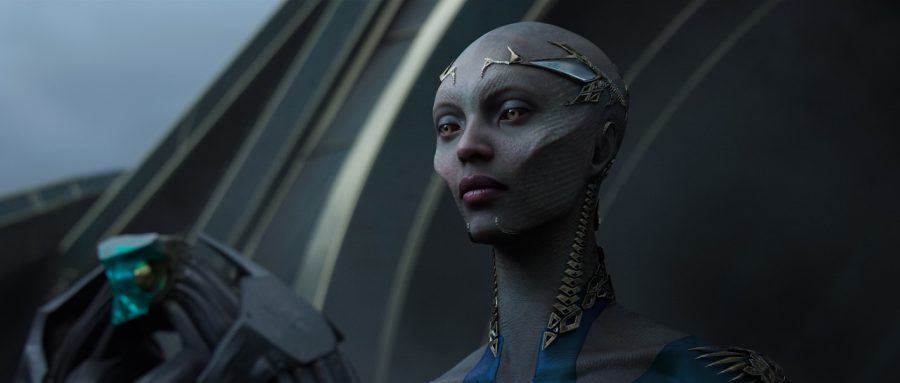
Dale Herigstad, Chief Creative Officer at design firm Schematic, spoke today at the XML Auckland conference. Herigstad worked with Steven Spielberg on the conceptual design for the film Minority Report, including designing the hologram screens on which Tom Cruise used his hands to navigate.
The subject of Herigstad's presentation today was new forms of User Interfaces for Web, TV and other media. Examples of the interfaces he discussed were touch screen and "distance gestures" - the latter being what Cruise was doing in Minority Report. Herigstad showed some real world examples of distance gestures, mostly from the TV/movie industry.
Note: Big thanks to Kaila Colbin's excellent live-blogging of Herigstad's talk at XML Auckland, on which much of this post is based.
Designing for Distance
Herigstad said that the audience nowadays is everywhere: watching TV, using Facebook on their iPhone or computer. Whatever screen wherever - this is where the audience is going. What Schematic is doing in a lot of its design work is considering the distance between a user and the screen, in various contexts. He noted some instances of this analysis:
- Personal media is 1-2 foot navigation - computer, iPhone, etc. Personal devices are where the audience is really close and can actually touch the screen.
- The traditional TV experience is 10 foot navigation; includes friends and family.
- Public media is screens that the audience doesn't own. People can walk up and interact with them. This type of screen can be anywhere from 2-200 foot navigation, and could also include layered navigation (somebody close, somebody far).

Example of DVD content augmented with added interactive media, which could be downloaded from the Web.
Cutting Edge Media Design Concepts
Herigstad drew a big line between distance gesture (TV and public media) and touch gesture (personal media). He explored some of his firm's current interface design concepts. With thanks again to Kaila Colbin's real-time notes, here is a summary:
Using perspective. Think football game graphics that zoom in and out on your TV screen (see screenshot to the right).
- Products as experiences. They're less about a product (computer, phone, etc) and more about what the user is doing.
- "Your interface is your brand".
- Time: now and next. A lot of projects they're doing are looking at designing concurrently something for now (current reality) and something visionary (your brand in the future when some of these limitations go away). He later discussed the following time chain: archive --> recent --> now --> next --> promo.
- Utilize z-space - dive in, pull back out. Flash is being used a lot now on set-top boxes.
- Hand gesture as input. With his work on Minority Report, his job was to figure out what it will be like to interface with the computer in the future. He noted that one of the inspirations was sign language.
- Pure gestural navigation for TV. They're working with Prime Sense, based in Israel. He showed a brief video of controlling volume using a hand gesture. He loves the purity of not having a remote device. But it's not just for entertainment industry, Herigstad said that it has other implementations - for example doctors in surgery. The overall concept he explained as "training a machine to respond to the language of your hands."
- Brainwaves as inputs they want to get data coming out of your head! (hopefully Marshall doesn't read that bit)
- Screens as wallpaper. Video will not be "furniture" anymore, but part of the background. For example watching a movie across a wall.
- Dynamic Assemblage. Instead of watching online media piecemeal - e.g. YouTube videos found through Google or Digg - Schematic is exploring "advanced metadata" that will assemble your viewing experience automatically. He noted that currently when we watch television, there's a careful production process that happens behind the scenes to craft the branding, promotions, credits, the show itself, etc. He sees that in the future the system will understand these parts, the crafting and user preferences so it will be able to assemble media for you. So 'dynamic assemblage' means that online experiences could look like television in the near future, but assembled automatically.
Minority Report UIs - Not That Far Off?
Herigstad finished by talking about what it means to design for cross media. From a television standpoint, it's very common to have a list of things on the left and some more detail on the right. So some of the interaction concepts they're working on can utilize this. For example with touch gestures, you can touch an item on the left and it would open on the right. With hand gestures, you could gesture at an item on the left and flick it over to the right.
Unfortunately Herigstad couldn't show us some of the things he's working on that use the above concepts, as he's under NDA for a lot of the implementations. But the concepts he discussed today are very thought provoking and give us a glimpse of what media (particularly television and movies) will look like in the future. Because almost all types of media will be on a Web platform in the future, it follows that these concepts will also be very important in the development of Web technology.
Comments
Subscribe to comments for this post OR Subscribe to comments for all ReadWriteWeb posts
I believe that everyone want a screen like this!
is this kind of like what Patti Maes is working on at MIT? (TED talks http://www.ted.com/index.php/talks/pattie_maes_demos_the_sixth_sense.html) pretty cool tool when its finished
Looks interesting. Are they using a hand device or are they trying to sense the motions from an external sensor?
I worked on a project at uc san diego that aimed at using hand motions to drive a large screen display. It was using two cameras overhead and we had moderate success where we were able to trace a person's name successfully. We also tried gesture detection without any hand devices. We were unable come up robust solution that worked most of the time.
Here's the project video along with further information: http://tommy.chheng.com/index.php/2009/05/very-large-screen-displays-driven-by-hand-tracking/
Very cool. As more data comes online, better decisions need to be made, and networks get better UI's will only improve. UI's will integrate the new data and the 5 senses.
It is a shame Cablevision Cable in the US gave up their choose your angle service for basketball or hockey, i.e. Game Director http://www.itvdictionary.com/pov.html
Look at recent Ted examples of MIT media labs, sixth sense, and the Allosphere.
http://siatomiclabs.blogspot.com/2009/05/data-portability-in-future-impulse.html
http://siatomiclabs.blogspot.com/2009/05/listen-practice-learn-then-tell-story.html
Herigstad finished by talking about what it means to design for cross media. From a television standpoint, it's very common to have a list of things on the left and some more detail on the right. So some of the interaction concepts they're working on can utilize this. For example with touch gestures, you can touch an item on the left and it would open on the right. With hand gestures, you could gesture at an item on the left and flick it over to the right.
Don't you think the your arms will get tired after like 2 minutes? Try moving your arms around in front of you for a solid 2 minutes. You'd be surprised how tired they get, even if you're fit.
We saw at CES this year some very impressive UI using Gesture based interface like this one made by the french Orange Valley : http://www.youtube.com/watch?v=K0-4-FObaRU
Quite right!!!!"Multi-touch" is so yesterday. In fact, attendees of the “D” Conference (http://allthingsd.com/d/) will see Canesta (http://www.canesta.com) demonstrate how its 3-D vision technology enables natural interfaces "beyond multi-touch", making the “User the Remote”, as computers, TVs, media centers, videogames and other everyday devices gain new means to interact with us.
He explored some of his firm's current interface design concepts. With thanks again to Kaila Colbin's real-time notes.Replica Louis Vuitton handbags have become extremely popular over the years. Those who want the look and feel of a Replica Prada Handbags, but do not want to pay thousands of dollars for one, have found a real treasure in replica designer handbags. Here's a quick guide to Fendi replica handbags and how they are taking the handbag market by storm.
yes,Don't you think the your arms will get tired after like 2 minutes? Try moving your arms around in front of you for a solid 2 minutes..Gucci replica handbags
The new XBox technology "Natal" will do something very similar. Also with brainwave entrainment becoming more widespread, the future will have everything controlled by our thoughts alone!
I am very pleased to read the article in your Blog.
It gives me new knowledge has come very grateful.
I believe that everyone want a screen like this!