



ReadWriteWeb

The 3D Web in 2008

Written by Sarah Perez / December 18, 2008 8:08 AM / 13 Comments

What's going on with the 3D web? At one point, it was being heralded as the next big thing. Is that still the case? Take for example, the virtual world Second Life. Once a booming place where every business had set up their online presence, the formerly happening hotspot is now gloomy and dead. As one-time Second Life reporter Eric Krangel said, hanging out in Second Life is "about as fun as watching paint dry."

But Second Life isn't the end-all be-all of the 3D web and its slowdown does not necessarily mean that the 3D web itself is dead. Second Life is gasping for air - at least in terms of reputation, if not actual userbase - no matter what Chief Executive Mark Kingdom would have you believe. (Hey Mark, want to count this as one of your press mentions to show how much buzz the network is still getting?) Other attempts at virtual worlds, like Google's Lively, have just given up and are shuttering their doors for good. Who's in and who's out is still a mixed bag, though. Disney closed shop earlier this year, but Sony just launched their new PS3-based virtual world only days ago.

Still, let's face it, playing what are essentially online computer games where the "fun" is in interacting with random strangers may have been an interesting experiment, but now that the hype has died down, we can see that they only attract a niche crowd. These worlds will not deliver the promise of the 3D web that we had once imagined they would.

Where 3D is Useful: Mapping

When 3D technology is implemented for more practical purposes, though, it can be incredibly useful. Some of the most innovative developments in 3D technology involve advances made in mapping. The newly redesigned Google Maps' Street View is a great example of this. Their recent update lets you drag a figure (the "Pegman") over any street to get a preview of Street View for that location. When the Pegman lands, the whole map turns into a Street View viewer. Google Maps with Street View has also been delivered to our mobile devices where it helps us navigate unknown areas of our world when we're away from our computers.

Meanwhile, Microsoft has also integrated 3D into their mapping platform, only in a different way. They launched their Live Labs project Photosynth in August, which lets you stitch together photos to create detailed 3D environments. Last month, they integrated Photosynth with Live Maps, letting you explore various landmarks and cities in 3D as well as share your own "synthed" photo collections with the other users of Live Maps.

Where 3D is Cool: Browsing

Also this year, we've seen some developments in the use of 3D to deliver better visual browsing experiences. Amazon launched their 3D Winodwshop site which lets you virtually browse through the company's top products.

We've also seen other web applications integrate this 3D visual browsing technology including ManagedQ's semantic Google-based search, Photo Stream's visual newsroom as well as newer search engines like Viewzi and SearchMe. Although none of those have hit the mainstream, they all are interesting experiments.

However, one of our favorite 3D browsing tools is the technology from Cooliris, a browser plugin that lets you transform the web into an immersive 3D experience. With Cooliris, you can surf a "wall of content" from sources like Google, Flickr, Yahoo, SmugMug, and DeviantArt. In October, the company also launched an iPhone application that does the same.

Similar to Cooliris's iPhone app, Microsoft took Seadragon, the technology that supports Photosynth, and released it as an iPhone application callled Seadragon Mobile. With this mobile app, you can browse several image collections including the Library of Congress maps from the TED demo, NASA images, a two-billion by two-billion pixel map of the world, and you can also load custom content via an RSS feed.

3D's Future: Shopping?

As The Guardian reports today, there are many people who think that online shopping is the next frontier for the 3D web. In particular, they make mention of a company called ExitReality, who is developing a 3D plugin that can transform any 2D web site into 3D. Visitors using ExitReality's plugin can change into avatars to wander through web sites and chat with other users. Says ExitReality founder Danny Stefanic, who has been working with virtual reality since 1994, "it's not a replacement for viewing the 2D page - that is still the best way to consume that content - but it gives everyone a 3D space that they can utilize if they want to. And what we have found is that instead of the two- or three-minute session times of 2D websites, when we are in 3D and exploring and chatting to people with similar interests, we spend 20 to 30 minutes there." He notes that sites implementing 3D could offer online sales agents that could chat to visitors or demonstrate products.

In other words, 3D for marketing and sales. Sigh.

Is There Nothing Else?

Last year, we had once wondered if 3D interfaces were useful or just a novelty. We think the jury is still out on that. Besides mapping of course (which extends to new developments in Google Earth, too), the majority of the 3D launches we've seen over the year are fun...even cool...but not incredibly life-changing. In fact, the newest uses of 3D are even more kitschy and even less useful than those that we saw earlier this year. The most recent 3D sites actually backtrack to 3D's beginnings and require you to break out your nerdy red-and-blue glasses to view them. For example, a site called Snowdin.com, is a new holiday Flash production by Colle+McVoy that's entirely in 3D.

For even more mindless fun, we just discovered that you can create your own red-and-blue doodles at the new Neave Anaglyph site.

Sure, we may have rushed out to the car to retrieve our glasses left over from the weekend showing of "Bolt 3D" to view these sites, but we don't imagine that 3D glasses will ever become the new must-have accessory for internet surfing. So where does that leave 3D technology for consumers browsing the web? Fun, games, and virtual worlds? Yes, that seems about right. Although some businesses will find 3D technology useful as we noted before, we did not see this technology become the most ground-breaking innovation of 2008...unless you count the pinching and zooming that took place on our iPhones.

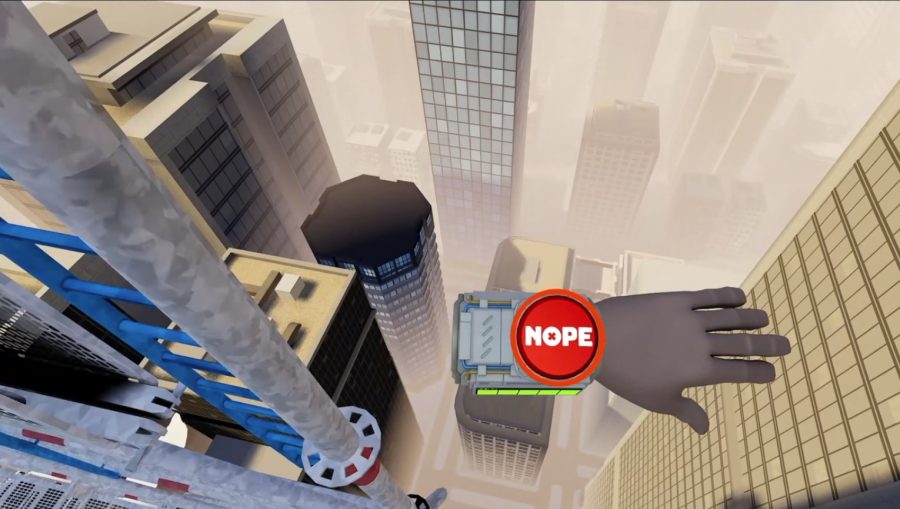
Image credit: 3D images above courtesy of Adverlab; main image: ny3d

Comments

Subscribe to comments for this post OR Subscribe to comments for all ReadWriteWeb posts

  1. Dont forget Floorplanner, came out of beta yesterday. Let's you draw plans in 2D and view them in 3d. Check the 3D demo:

    http://www.floorplanner.com/demo/3d

    Posted by: jaap | December 18, 2008 10:03 AM


  2. Great article! Keep up the good work.

    I agree with you about Cooliris. They are doing some amazing stuff. I think in 2009 people are going to be talking about Cooliris much the same way they talked about Google in 1999. Watch out, they are going to change the world.

    Posted by: drumroll | December 18, 2008 12:18 PM


  3. 3D is nice but illegibility

    Posted by: Ɓukasz | December 18, 2008 2:02 PM


  4. 2008 has been a great year in Norway related to 3D. First of all we have got a groundbreaking mapping service in 3D that utilizes military technology from the Swedish military (http://www.larre.com/2008/11/05/biggest-3d-revolution-in-10-years/). The service goes way beyond what Google has until now and will release some pretty awesome stuff over new years.

    Also we have gotten a really great floorplanner / homeplanner in 3D and 2D (http://www.finn.no/finn/realestate/homeplanner). The technology/service is something which I think is foremost in the world in this category.

    Posted by: Eyvind A. Larre | December 18, 2008 2:04 PM


  5. Microsoft's Photosynth is definitely one of the more creative projects they have lately and a cool way to reconstruct 3D space.

    3D web can also be applied to virtual tourism. Sosauce built a virtual Ross Island of Antarctica, which is off limit to public in real life.

    http://www.sosauce.com/mesa3d

    Posted by: Jamie Lin | December 18, 2008 2:11 PM


  6. ExitReality has transformed the entire web into 3D. Every web page is a virtual world. The platform is made in open standards so anyone can participate and provide their own website in 3D. With the worlds largest web 3D search engine and the ability to drag 3D widgets to across the entire web, 2008 has been a great year for virtual worlds. Also, ExitReality can be used in any industry vertical, not just sales and marketing. Happy Christmas.

    Posted by: Edward | December 18, 2008 3:32 PM


  7. Check also out Vizky, the 3D plugin for Firefox and IE. This gives a complete workflow for making 3D animations with live information pushing 3D elements to clients connected from a server. This season of 'Who wants to be a Millionaire' at TV2 Norway used Vizky for a play-along game together with its live broadcast of the program giving the viewers the ability to answer the same questions from home in real time. See www.vizky.com for examples.

    Posted by: Even Normann | December 18, 2008 3:48 PM


  8. Cooliris is 3d? No it's not. It's a cool way to look at photos and videos, but it's definitely not doing anything in 3d.

    And "transform the web into an immersive 3D experience"? Come on you copied that from some PR nonsense, I hope.

    Posted by: Shaan | December 18, 2008 10:56 PM


  9. Do not forget the new project of adobe that you were talking about in an early post :
    http://www.readwriteweb.com/archives/adobe_experimenting_with_semantic_3d_worlds.php

    Posted by: hunold | December 19, 2008 5:15 AM


  10. The thing about Second Life is that virtual lives become like real life. After all the spectacle you realize that life (with limited and non intuitive interaction) is boring and ultimately "reality" with a naritive is so much more fun. Just look at people who play world of Warcraft and you see my point.

    Posted by: Kburrell | December 19, 2008 5:57 AM


  11. I pretty much disagree with most everything in this article.

    First of all, Second Life represents a primitive start to a 3D web... think AOL in the 80's. But it is a start. I do agree that its commercial potential is exaggerated, especially with an upper limit of 100 people on a server at a time, its laggy, inefficient in its use of computer power, etc. It is the best of what we have now.

    Lively was a wasted opportunity on Google's part offering no community support, Playstation Home is not likely to be more than a gimmick either. The lack of support for user created items will see to that. Disney's Virtual Kingdom wasn't even 3D.

    Street view is another Google boondoggle. I find Google Earth with user submitted geotagged photos far more useful. Geotagged photos could also make Microsoft Photosynth useful as well, for now it also has a gimmick feel to it.

    As for 3D browsing via Amazon or Cooliris, the coolness factor disappears in about 10 minutes. And it isn't real 3D, just 2D with perspective.

    Exit reality is new implementation of old VRML tech. It does not take long to use it before you realize why VRML never really caught on.

    Posted by: ArianeB | December 22, 2008 1:26 PM


  12. ArieneB, thanks for adding some clarity to this. I agree with your comment. Cooliris is cool, but not really 3D.

    I think companies like Vivaty are doing a better job of creating a more accessible 3D user experience in the web. Ultimately consumer 3D will be about socializing. I think of what they are doing as really the early web browser to what SecondLife did more like AOL or Prodigy (stand alont client). ExitReality is more of an old tech demo.

    Also, just for the record, 3D is very mainstream. Video game companies sell many billions of dollars of it every year. Even the most casual, Nintendo Wii, is fully 3D with characters, worlds, etc. Kids of today are fully 3D proficient. The web will catch up.

    Posted by: Smitty | December 31, 2008 1:16 PM


  13. funny 3d ;)
    http://www.youtube.com/watch?v=5z8atRVj6Ic

    Posted by: Aldons | January 12, 2009 12:21 AM


The ReadWrite Real-Time Web Summit
RWW SPONSORS


FOLLOW @RWW ON TWITTER

ReadWriteWeb on Facebook


TEXT LINK ADS