

10 result(s) displayed (1 - 10 of 10):
The CEO of OverDrive, which distributes e-books and audiobooks to libraries, has dropped a pretty obvious hint that the Kindle will join other major e-readers in public libraries in September. EarlyWord reports that Steve Potash looked "like a kid with a delicious secret" at OverDrive's Digipalooza conference last weekend, saying that he was "not allowed to announce a date ye[t]," but he included this blunt clue in his "Crystal Ball Report" during the final session:
Streamlining (both downloading and ordering)
Explosion (we have gone from two reading devices to 85 and more are coming)
Premium (the library catalog as the most premium, value-added site on the Web)
Traffic (enormous growth coming by year's end)
One of my favorite places on earth, the British Library, and the world's most popular search engine, Google, have struck a spectacular deal. The BL will allow the search and media company to scan and index 250,000 texts dating from between 1700 and 1870.
The two organizations will make the historical books, pamphlets and other periodicals available both on the library's site and on Google Books.
Yesterday Seth Godin posted an essay on his blog about "The Future of the Library," a call-to-arms for librarians to envision their work less as a defender of a "warehouse for dead books" but as as a "producer, concierge, connector, teacher and impresario." To paraphrase the response of librarians on blogs and on Twitter: "Yes, we know." and "Yes, that's what we do."
One example of this "future of the library" that is indeed here now: the newly released New York Public Library app, available today via iTunes: Biblion: The Boundless Library. The app is a re-launch of the library's Biblion journal, but in a format specifically designed for the tablet.
At first glance, yesterday's news that Amazon is launching a Lending Library - an arrangement to make Kindle e-books available for libraries to loan - sounds like good news for libraries. But many librarians are taking the news in stride, glad to have more options for their patrons, but cautious - even skeptical - about the program's implementation and its impact.
The stakes are incredibly high for public libraries right now. Federal, state, and local budgets are tight. Libraries are closing or cutting back on services. Alongside these fiscal trends are digital trends: the explosive growth in e-books, something that is radically changing the face of book publishing, book distribution, and yes, book lending.
Clearly consumers are interested in reading e-books, as the latest sales figures from the Association of American Publishers demonstrate. But what isn't clear is how this interest in e-books will translate into libraries' ability to meet their patrons' demands. There are questions about licensing, DRM, fees, and formats, for example.
If you've ever worked in a library, you're familiar with the drudgery of shelf reading. That's the process of verifying that all the books on a shelf are in the right order, based on their call numbers. Books get out of order fairly easily, when they're taken off the shelf and examined, for example, or when they're just stuck in the wrong place.
Miami University's Augmented Reality Research Group (MU ARRG! - that exclamation point, I confess, is my addition), led by Professor Bo Brinkman, has developed an Android app that could save librarians a lot of time and hassle. Using the Android's camera, the app "reads" a bookshelf, and with an AR overlay, quickly flags those books that are misplaced. It will also point to the correct place on the bookshelf so the book can easily be re-shelved correctly.
There's a certain amount of wear-and-tear on library books. You can only check out Harry Potter and the Half-Blood Prince so many times, for example, before a well-loved book becomes a little too well-loved for circulation. Librarians are masters at maintaining books - repairing spines, patching torn pages, protecting covers, keeping books available for library patrons.
But imagine, if you will, a publishing company - oh, let's say HarperCollins - telling libraries that after checking out a book a certain number of times - oh, let's say 26 - that they've reached the cap on loans. The book can no longer be shared, and libraries need to return the copy or buy the book again.
Sound crazy? Well, that actually is the new policy for HarperCollins, reports Library Journal, detailing the new terms for its e-book loans via OverDrive, the main e-book distributor for libraries.
The John Rylands Library at the University of Manchester in England is digitizing one of the largest and most important Korans in existence, one that could previously be studied by few due to its size, weight and fragility. Funded by the non-profit Islamic Manuscript Association, the project will take just under 1,000 images of the 500 year old book.
The "Rylands Koran of Kansuh al-Ghuri," with pages that measure three feet by two feet, is believe to have originated in Cairo from the library of Kansuh al-Ghuri, one of the last Mamluk Sultans of Egypt.
As e-book sales continue to grow, the bibliophiles among us are wont to ask "Hey, what about libraries?" Will we be able to check out digital versions of books from our local libraries and read them on our e-readers?
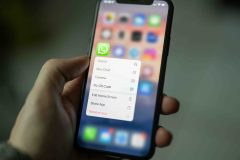
Yes, if your library uses Adobe Digital Editions for its e-books and if you have the Bluefire Reader app. The app, available for free for iPhone and iPad, allows you to access the digital version of the books you check out from your (participating) local library.
What would Google look like if it was built by librarians? We're about to find out. A project called "Reference Extract," has a goal of building a web search engine where the weight of the search results aren't determined by any sort of algorithm like PageRank, but rather by the expertise and creditability judgments from librarians around the world. In other words, it's smart people-powered search.
This is a guest post by by Zach Beauvais.
Talis is a bit different than most web 2.0 startups we hear about. It is a 40 year-old technology
company with a significant presence in the UK - nearly a quarter of British
academic and public libraries make use of its software. Although the Web is a
prominent feature of the organization, their primary focus is on data
management.
Movable Type search results powered by Fast Search