


10 result(s) displayed (1 - 10 of 82):
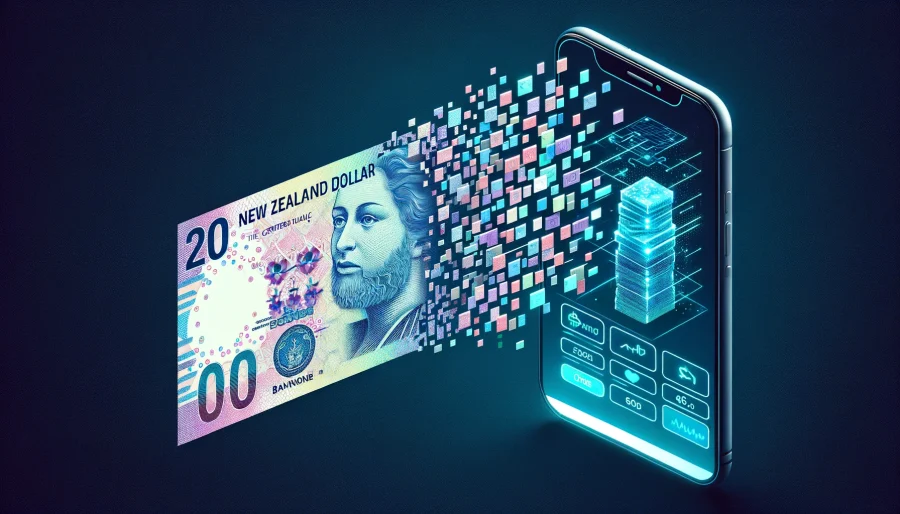
We may still be a few years away from the mainstream adoption of mobile payments, but that hasn't stopped a whirlwind of buzz and product development from going on in the space. Some of the biggest players in tech, telecommunications and finance are all working on solutions that will enable people to pay for everyday items using only their phones.
So what's the hold up? For one, there are technical challenges. Technologies like NFC are not yet ubiquitous in handsets, and smartphone adoption itself is still growing. Few and far between are the retailers who have the infrastructure in place to support accepting payments this way. Another issue is consumer demand and trust. Only 23% would be willing to us their mobile device to pay for things, according to a recent report from KPMG.
If you think whipping out your phone, searching for a venue and then tapping the "Check In" button on Foursquare is a tiresome waste of several seconds, you're in luck. Like so many other things in life, the Foursquare check-in promises to be simplified by NFC technology, allowing us to simply wave our phones to automatically check into a venue.
Of course, mainstream adoption of NFC is at least a few years away, but owners of Symbian-powered phones can get started thanks to a new update to the Foursquare app for the platform.
Shopping is overwhelming enough, especially around the holidays. The leading consumer Web companies are falling over themselves to make it easier using all the innovative technologies at their disposal. As they figure it out, though, that only leaves consumers with even more options. Do we shop in person, on our desktops, our phones or our tablets? Do we go to a website or launch an app? Which one? How do we pay?
These questions have to be answered before we even get to choosing what to buy. They all make shopping easier, though, whether through giving us more information before we buy or by speeding up the process. Here are three kinds of Web-powered innovations that will contribute to the future of shopping.
In all the rumor-crazed lead-up to the launch of the iPhone 4S, one feature that was speculated about but never that likely was the inclusion of near field communications. Next year, when the iPhone 5 is actually, finally released, there's a very good chance it will have NFC, according to a report from DigiTimes.
Citing sources at Taiwan-based smartphone manufacturers, DigiTimes says Apple's new iPhone will be one of several devices to ship with NFC in 2012, although we expect the sometimes faulty iPhone rumor mill to churn on until the device is unveiled next year.
PayPal today issued an update to its Android app that will enable people to make payments to each other via near field communications enabled smartphones. This does not include consumer to merchant payments but rather is a widget geared towards making payments with friends or other PayPal using people that happen to have NFC on their devices.
PayPal has shunned NFC to this point in its mobile payments push. The company's stance has been "it will not be a hard thing for us to implement if we find that it gains popularity." Really, this new NFC sharing widget for Android does not change that stance at all. Peer-to-peer payments in PayPal are a service, not a business vertical. Essentially, this update for PayPal does not affect how the company will approach mobile payments.
Hackers will have fun building Adobe AIR apps for mobile devices that incorporate Near Field Communication (NFC) sensors, now that AIR version 3.0 enables software access to hardware data including vibration control, magnetometers, light sensors and NFC.
The API is likely to lead to some really fun capabilities. Imagine all the accessibility and beauty of Adobe AIR, combined with the real-world location and frictionless data transfer capabilities of NFC. Hot.
Google and MasterCard have announced the official launch of Google Wallet, their joint effort in mobile payments using near-field communications (NFC).
Google Wallet is rolling out in a limited fashion, but there aren't enough NFC-capable phones out there to really call this a "launch." And that's just the hardware part; customer behavior will have to adjust, too. Industry insiders say the era of NFC payments is still a year or two away.
Apple fans and the technology press have been wondering aloud for months about what new features will be included in the next iteration of the iPhone. As the iPhone 5's rumored October launch gets closer, that speculation grows more feverish, as details are leaked and rumors turn into facts.
We're reaching that point with the iPhone 5 (or is it iPhone 4s? Or both?), which is widely expected to launch within a matter of weeks. With a barrage of new rumors and purported leaks everyday, it's hard to know for sure what's true. A few things are practically guaranteed: the phone will be faster with upgraded tech specs. It will probably have a better camera than the iPhone 4. One thing that's always been unclear is whether the device will support NFC.
An experiment in near-field communications is underway at Arizona State University that shows the potential and future of NFC-enabled smartphones. The university has been rigged so that a select group of students can use their NFC smartphones to gain access to university buildings and resident's rooms. Students have said that they would be interested in using their smartphones to pay for public transit, meals in dorms and to purchase merchandise.
This is precisely the type of test that is the precursor to widespread adoption. Test are performed at universities, rolled out to other small communities and the businesses and large corporations. Within a few years, everybody is doing it. NFC-enabled smartphones are just starting to make that journey.
Of all of the potential applications of near field communications (NFC) technology, the one we hear the most excitement about these days is mobile payments. And while everybody from tech giants to analysts is predicting that we'll soon be paying for things by waving our phones, this is far from the only current use of the technology.
Mobile gaming is another space that is seeing the effects of NFC. In June, Rovio announced the launch of Angry Birds Magic, which connects the company's popular mobile game to the physical world using NFC and GPS. Players using supported devices can tap their phones together or wave them in front of Angry Birds NFC stickers to unlock new levels and birds in the game.
Movable Type search results powered by Fast Search